Featured Press

Dr. Azza Halim has been featured or quoted in all of the following media.  Her expertise is widely acknowledged and her patients are proud to have such an experienced practitioner who has worked in all corners of the globe.

I’m a Regenerative Medicine M.D.—Here’s the Only Lymphatic Drainage Product I Use, and It’s Under $60

If you’ve spent any amount of time on social media lately, it’s possible you’ve stumbled on reels that promote treatments aimed at “snatching” the face, detoxing the organs, and delivering a radiant glow—all by “flushing” the lymph. The Cleveland Clinic explains that the lymphatic system produces immune cells that help protect against viruses, bacteria, parasites, and fungi; helps the body absorb nutrients; and filters out excess fluid from tissue. It’s the third function on this list that typically draws interest for the aesthetic effect, as fluid can create puffiness in the face (as well as fluid retention in the abdomen or limbs, which clinicians may refer to as “edema”). But how can you tell what’s actually good for you…and what’s just online buzz? Ahead, a multi-specialist medical doctor with expertise in aesthetics and cellular medicine highlights the lymphatic draining tools that are worth the hype, plus what you should consider before starting. About the expert Azza Halim, MD, is a board-certified physician and anesthesiologist specializing in regenerative medicine and aesthetics. She has practices in Florida, California, and Illinois. Infrared Light Dr. Halim says while methods like jade rollers, gua sha tools, cupping, wooden paddles, and foam rollers can mimic the gentle, rhythmic pressure used in clinical manual lymphatic drainage therapy, her own favorite method is an at-home LED or infrared device. A 2017 randomized controlled trial conducted by a team of doctors in Italy and China led to these observations on the effect of red light therapy on swollen limbs, as reported by the physician researchers: “After therapy, a significant decrease of limb circumference measurements was noted … Laboratory examination showed the treatment can also decrease the deposition of fluid, fat, hyaluronan, and protein, improving the swelling condition.” In other words, Dr. Halim’s favorite lymphatic drainage tool is informed by existing science that supports it. She says these next few may help move lymph fluid toward lymph nodes, especially after surgery or prolonged immobility. They work best when pressure is very light—”more is not better,” she says, and cautions that “poor technique can be ineffective or counterproductive.” Dry Brushing Tools Dr. Halim suggests dry brushing—explained by the Cleveland Clinic as using a dry, stiff-bristled brush to massage your skin—may encourage superficial lymph flow and improve circulation. Note she also stresses that evidence for “detoxification” is limited, though many people may notice a temporary reduction in puffiness, smoother skin, and a sense of invigoration. She recommends the avoidance of dry brushing on broken skin, eczema, or active rashes, as it may damage the skin barrier or causes “irritation, inflammation, and infection.” Best for: People looking for a simple, inexpensive ritual. Vibration Plates Vibration plates stimulate muscles through rapid oscillations, which can indirectly promote circulation and lymph movement by activating muscle pumps. While not designed specifically for lymphatic health, Dr. Halim notes that short sessions may help with lower-extremity swelling in otherwise healthy individuals. Experts at the MD Anderson Cancer Center also suggest that some studies have shown this type of low-intensity vibration could be helpful for cancer patients as a way of maintaining or stimulating bone and muscle growth. Dr. Halim cautions that anyone who is pregnant, prone to blood clots, or has implanted medical devices should avoid using such devices. Best for: Sedentary individuals or those with mild leg edema Compression Garments Compression stockings and sleeves are among the most evidence-supported tools for lymphatic support, according to Dr. Halim. For example, a 2024 review published in the Medical Oncology journal found that compression garments could be beneficial for the prevention of lymphedema in cancer patients, especially for those with breast cancer. “By applying graduated pressure, they prevent fluid from pooling and encourage lymph return,” Dr. Halim says. “These are standard in medical management of lymphedema and venous insufficiency.” She adds that medical-grade compression should be prescribed and the correct sizing of clothing is critical. Best for: Long flights, standing jobs, post-surgical swelling Pneumatic Compression Devices Pneumatic compression devices are inflatable sleeves used to apply sequential pressure, effectively “pushing” lymph fluid toward central drainage points. Dr. Halim says they are clinically used in certain lymphedema patients and post-operative care, and cautions that these devices are not appropriate for casual wellness use without supervision because they must be prescribed by a physician. Best for: Diagnosed lymphedema under medical guidance Finally, Dr. Halim stresses that the best lymphatic drainage options will depend on whether an individual is experiencing medical lymphedema versus cosmetic swelling, and that proper assessment is necessary for an appropriate treatment plan in cases of medical lymphedema.
Read More »

Lymphatic Drainage: Medical Facts Versus Social Media Hype

Scroll through social media and you’ll likely see lymphatic drainage framed as a cure-all, promising detoxification, flatter stomachs, clearer skin and even immune boosts with the swipe of a tool or a quick massage. From gua sha and dry brushing to compression boots and supplements, lymph-focused wellness has exploded into a full-blown trend. But what does the lymphatic system actually do, and where does science end and marketing begin? According to Azza Halim, M.D., a multi-specialist physician, much of what’s being promoted online oversimplifies a complex and essential body system. The lymphatic system plays a vital role in immune defense and fluid balance, but it is not a stand-alone detox organ. Misunderstanding that distinction can lead patients toward ineffective or even unsafe practices. In this Q&A with The Educated Patient, Halim breaks down the true medical role of the lymphatic system, explains why interest has surged in recent years and clarifies which lymphatic drainage approaches are evidence-based versus overstated. She also shares simple, low-risk ways patients can safely support lymphatic health without falling for misleading detox claims. Lymphatic drainage has become a major wellness trend. What is the lymphatic system actually responsible for, and why has it suddenly gained so much attention? Azza Halim, M.D.: Let’s define lymphatic drainage with medical facts versus social media hype. The lymphatic system is not a detox organ — it’s a circulatory and immune support system. Therefore, its main responsibilities include balancing fluid via transporting excess interstitial fluid back to the bloodstream as well as immune cells and filtering pathogens via lymph nodes. It also moves cellular byproducts toward the liver and kidneys so these organs can perform detoxification. It does not have a central pump and therefore relies on movement, muscle contraction, breathing and pressure gradients. Why has it been such a common focus? Unfortunately, increases in sedentary lifestyles and in postsurgical aesthetics (liposuction, body contouring) have raised awareness of inflammation, edema and immune health, along with social media reframing lymph as a “beauty and detox” shortcut. The interest is understandable but often oversimplified, as “detox” claims are misleading or overstated. Promoting lymphatic products that claim that simply stimulating lymph flow will remove toxins directly is not accurate nor safe. Many products and tools claim to “detox” the body through lymphatic drainage. From a medical perspective, what claims are misleading or overstated? AH: Medically speaking, beware of any claims that say a product does the following: “Flushes toxins from the body” “Cleanses the blood” “Removes heavy metals” “Detoxes organs” This is very misleading and confusing to many readers, and we should be educating the masses on medical facts. Lymphatic movement helps transport waste and detoxification, and occurs in the liver, kidneys, lungs and gut along with real evidence techniques for proper lymphatic drainage. Which lymphatic drainage techniques have the strongest evidence behind them, and who is most likely to benefit? AH: Lymphatic drainage that is evidence-based is great for lymphedema, postsurgical swelling and postoncologic care. However, it must be performed by trained therapists. We also emphasize the importance of walking, light resistance training, rebounding and diaphragmatic breathing. We have options such as compression therapy that is medically prescribed for edema and venous/lymphatic insufficiency and postsurgical patients, along with sedentary individuals with dependent swelling. Certain inflammatory or autoimmune conditions are case-dependent and need medical diagnosis. What role, if any, do supplements play in supporting lymphatic health, and which ingredients are worth paying attention to? AH: There aren’t any supplements that “drain lymph.” We do know that hydration and electrolyte balance are necessary, as well as magnesium for muscle relaxation and lymph movement facilitation. For someone curious but overwhelmed by options, what simple, low-risk steps can they take to support lymphatic function safely? AH: If something sounds like a cleanse, it probably isn’t physiology. Simple ways to support lymphatic function include walking daily (even 10-20 minutes helps), hydrating consistently, diaphragmatic breathing (5 minutes/day), gentle stretching or yoga, and avoiding prolonged sitting (stand up every 60-90 minutes). This interview was edited for clarity.

Read More »

The 28 best neck creams for firmer, healthier skin, according to dermatologists

Your delicate neck and décolleté are just as exposed to UV rays, pollution and other external skin stressors that ultimately have an aging effect on the skin, which is why you shouldn’t delay adding a neck cream to your routine. After all, your skin care shouldn’t stop at your jaw, and using a cream, oil or serum targeted for the neck area can help keep these thinner-skinned areas hydrated and healthy. “Whether you are already seeing signs of aging or not, use skin care on your neck daily,” Dr. Loretta Ciraldo, a board-certified dermatologist and the founder of Dr. Loretta skin care, said. “I find that neck skin care is too often overlooked, with the net effect being that, for many of us, our necks show our age before most of the face (with the exception of thin eye skin, which is often the first to show visible unwanted aging changes).” Fortunately, adding a neck cream to your anti-aging skin care routine is a simple, one-step process. You won’t need to layer on as much product as you might your face, since the skin in this area is thinner. Apply your neck cream once in the morning and once at night, and remember to apply your daily SPF to your neck and chest as well before heading out the door. How to choose the best neck cream Ciraldo said to look for products that have hydrating glycerin, firming peptides and botanical antioxidants. Glycerin “is great for all-day moisture,” while peptides assist with filling fine lines and wrinkles (which manifest as tech neck) and antioxidants support collagen to tackle the tightening and toning of the area. Other dermatologist-approved ingredients that help maintain a youthful-looking neck include niacinamide, hyaluronic acid and retinoids. Related articleThe best anti-aging products to add to your routine, according to dermatologists King also stressed that you should never forget your SPF. “Sunscreen will be the most effective ingredient over time,” she said. Robinson agreed, adding, “The most common pitfall I see with the neck and décolletage area is lack of consistency with sunscreen application. It is important to incorporate treatment products but arguably more important to start early with protecting the area with SPF.” And while neck cream can be used to prevent and reverse signs of aging, the dermatologists we spoke to acknowledged that skin care can only go so far. Especially when those with mature skin are looking to treat severe skin sagging and wrinkles, a more aggressive treatment such as injectables, noninvasive tightening procedures and surgery options might be necessary, depending on the desired results. In the meantime, though, adding a neck cream to your regimen can certainly give your skin a boost. Plus, with a plethora of options on the market, you can find something that fits into your routine and budget. FAQs The following FAQs have been answered by dermatologists Dr. Brendan Camp, Dr. Marisa Garshick and Dr. Dara Spearman; board-certified physician Dr. Azza Halim; and double board-certified plastic surgeon Dr. Akshay Sanan.

Read More »

Pain During Sex Isn’t Normal. Here’s How to Stop It.

Women’s health has come a long way. Conversations around perimenopause and menopause have exploded on social media and in group chats everywhere. But painful sex is still one of those topics many women whisper about, if they talk about it at all. Maybe it started after having a baby or crept in during perimenopause. Or maybe sex has always been uncomfortable, and you’ve assumed that’s just how it is. The advice women often get doesn’t help: Have a glass of wine. Try to relax. It’s part of aging. But experts say pain during sex isn’t normal — and it isn’t something women are meant to live with. More often, it’s a sign that something specific is going on: hormonal, muscular, structural, or deeper in the pelvis. And once the cause is identified, it’s usually treatable. It’s not in your head: Why sex hurts The clinical term for painful sex is dyspareunia, and doctors estimate it affects anywhere from 10 to 30 percent of women, with some research suggesting the number may be closer to 50 percent, particularly after menopause. “The rates are probably underestimated, because many women don’t report it to their physicians,” says Dr. Shieva Ghofrany, an OB/GYN and co-creator of Tribe Called V, a platform focused on removing stigma around women’s health. Unless pain is brief, resolves with a position change, and doesn’t return, you should bring it up with a clinician. For many women, one of the most frustrating parts of painful sex isn’t just the discomfort; it’s being made to feel like the problem is psychological. “Women come into my office already blaming themselves,” says Rachelle Bojer, a pelvic-floor physical therapist and founder of Lotus Physical Therapy in New York. “They’ll say, ‘I feel into it. I feel aroused. But it still hurts.’ That disconnect makes them think something is wrong with them, when there’s often a very real physical reason.” Here are the main causes of painful sex. When hormones change, sex can too Declining estrogen is one of the biggest contributors to painful sex. “The vagina loves estrogen,” Bojer says. It helps keep vaginal tissue thick, elastic, and well lubricated. When estrogen levels drop — after pregnancy, during perimenopause, or in menopause — that tissue can become thinner, more fragile, and more sensitive. Estrogen drops sharply postpartum, especially for women who are breastfeeding, which can temporarily mimic menopausal symptoms. Some women notice tearing or spotting after sex or say they suddenly need far more lubrication than they used to. According to Dr. Azza Halim, a board-certified anesthesiologist and physician with a focus in aesthetic medicine, anti-aging treatments, and regenerative medicine, estrogen affects more than moisture. It also influences muscle tone and how the nervous system processes sensation, which helps explain why pain can show up even when arousal is present. What helps: Treatment often focuses on improving tissue quality. Topical vaginal estrogen works directly on the tissue and can be highly effective. For women who prefer nonhormonal options, vaginal moisturizers and lubricating gels can improve comfort. If pain persists, pelvic-floor physical therapy may also help. “When hormonal therapy alone isn’t enough, that’s often a sign there’s muscle involvement as well,” Halim says. “Addressing both is what leads to real improvement.” It’s not your desire — it’s your muscles In many women, painful sex turns out to be a muscle issue, specifically the pelvic floor. Instead of weakness, the problem is often excessive tension: Muscles stay contracted and lose the ability to fully relax. “Some studies suggest 60 to 70 percent of women with painful sex have some degree of pelvic-floor involvement,” Halim says. That tension can show up in different ways. Some women feel sharp pain with penetration or a sense of restriction; others notice pain that lingers afterward. “Some women also have pain while sitting or exercising,” Bojer says. “Then they’ll tell me, ‘When I’m with my partner, it just hurts — before, during, and after.’” In younger or very active women, this pattern is often diagnosed as vaginismus (spontaneous contraction of the vagina). Bojer says she’s seeing it more frequently in athletes who train intensely. “Athletes and women in their 20s who are lifting and training every day are having pain with sex because their pelvic floor is so tight,” she says. “They’re healthy and active, but those muscles forget how to relax.” She compares it to a familiar injury: “It’s like sleeping wrong and waking up with a stiff neck. You press on it, and it hurts. The same thing can happen in the pelvic floor.” What helps: When pelvic-floor dysfunction is the source, doctors often refer patients to pelvic-floor physical therapy. Treatment focuses on retraining the muscles to relax and lengthen through internal manual work, breathing techniques, and guided stretching. “Diaphragmatic breathing helps down-train the pelvic-floor muscles,” Bojer says. At-home tools like dilators provide gentle stretching, while pelvic wands help release tight spots. “The dilator is something you insert and leave in place,” Bojer explains. “With the wand, the patient is finding the tight areas and stretching them.” When therapy isn’t enough, pelvic-pain specialists may prescribe vaginal suppositories with muscle relaxants. In persistent cases, Botox injections can help reset muscle tension. “For some women, one round is enough to reset the muscles,” Bojer says. This isn’t just motherhood For some women, painful sex traces back to childbirth — even if everything seemed to heal normally. Tears, episiotomies, forceps deliveries, and stitches can lead to scar tissue and adhesions, bands of fibrous tissue that form as the body heals and can limit movement at the vaginal opening. This pain doesn’t always show up right away. “Some women will have no pain, and then it creeps up later,” Bojer says. “Over time, that scar tissue can become more restricted and less flexible.” As movement becomes limited, the surrounding muscles often tighten to protect the area, which can add another layer of discomfort. Because postpartum care tends to focus on whether tissue has closed, and not how well it moves, these issues are easy to miss by physicians. What helps: Treatment focuses on restoring flexibility and

Read More »

What Dermatologists Want You to Know About the PDRN Trend

By Mili Godio  Among the many unconventional beauty trends circulating today, “salmon sperm facials” may be one of the most attention-grabbing. Scientifically known as PDRN (polydeoxyribonucleotide), the ingredient is derived from salmon DNA and has gained popularity for its potential role in skin repair, hydration, and rejuvenation. According to board-certified dermatologists, PDRN works by supporting the skin’s natural repair mechanisms, reducing inflammation, and improving elasticity. “It’s almost like giving the skin blueprints to rebuild itself,” explains Dr. Mona Gohara, a board-certified dermatologist. While PDRN has recently become popular in the U.S., it has been used for over a decade in countries such as South Korea for wound healing, post-procedure recovery, and skin rejuvenation. Dr. Azza Halim, a multi-specialist physician with a focus on regenerative and aesthetic medicine, notes that PDRN has long been utilized in medical settings to support healing and tissue repair. Though the treatment may sound novel, its medical applications are well documented. There are three primary ways PDRN is used in skin care today: microinjections (skin boosters), microneedling-assisted delivery, and topical products. In-office procedures allow PDRN to penetrate deeper into the skin, activating regenerative pathways and improving overall skin quality. These methods, while not yet FDA-approved in the U.S., are commonly used internationally and performed at the discretion of trained medical professionals. Topical PDRN products, often found in K-beauty serums and masks, are generally considered safe but provide more subtle results. Due to the molecule’s size, topical applications primarily offer surface-level hydration and barrier support rather than deep regenerative effects. When performed in a medical setting using sterile techniques and high-quality products, PDRN treatments are generally regarded as safe. However, dermatologists caution that procedures involving injections or microneedling carry inherent risks, including irritation, infection, or allergic reactions—particularly for individuals with fish sensitivities. Proper screening and professional oversight are essential. Experts emphasize that while PDRN shows promise, it is not a miracle cure. “There is real science supporting its role in wound healing and collagen stimulation,” says Dr. Gohara, “but many of the most dramatic claims extend beyond current cosmetic data.” As with any emerging skin care trend, dermatologists recommend consulting a qualified medical professional to determine whether PDRN-based treatments are appropriate for individual skin goals and health considerations.

Read More »

The Rise of NMN Supplements in the Longevity Movement

As the wellness industry continues to evolve, longevity has emerged as one of its most influential themes. While collagen once dominated the anti-aging supplement space, NAD⁺-boosting compounds—particularly NMN (nicotinamide mononucleotide)—are quickly taking center stage for their role in cellular health and energy production. Among the growing number of NMN-based supplements, Wonderfeel Youngr NMN has gained attention for its science-driven formulation and medical oversight. The supplement was developed by a Harvard-trained physician with nearly three decades of experience in NAD⁺ research and cellular aging, positioning it as a more rigorously engineered option in a crowded market. Each daily serving of Wonderfeel Youngr NMN delivers 900 mg of NMN, supported by a blend of research-backed ingredients designed to promote cellular resilience and overall wellness. These include ergothioneine, a potent antioxidant that protects against oxidative stress; resveratrol, known for its benefits to cardiovascular and brain health; hydroxytyrosol, which supports metabolic and heart health; and vitamin D3, an essential nutrient for immune function and cellular regeneration. According to board-certified dermatologist Dr. Kristina Collins, NMN serves as a precursor to NAD⁺, a molecule critical for mitochondrial function and cellular repair. “As NAD⁺ levels decline with age, replenishing them can help support energy production, reduce oxidative stress, and slow cellular damage,” she explains. Dr. Azza Halim, a multi-specialist physician with expertise in longevity medicine, adds that maintaining NAD⁺ levels may also support healthy glucose and lipid metabolism—offering benefits similar to those associated with GLP-1–based therapies. She emphasizes that formulation and delivery method matter, noting that IV NAD⁺ therapy may be beneficial for acute fatigue and recovery, while oral NMN supplements are better suited for daily, long-term support. Experts generally agree that NMN levels naturally decline after age 40, making supplementation more relevant for adults seeking proactive support for healthy aging. However, dermatologists caution that younger individuals, pregnant or breastfeeding patients, and those managing chronic health conditions should consult a healthcare provider before beginning NMN supplementation. As interest in longevity science continues to grow, NMN supplements represent a promising tool for individuals focused on maintaining energy, cognitive function, and long-term cellular health—when used thoughtfully and under medical guidance.

Read More »

Skip the Fillers: Vogue asks Dr Azza Halim

By Sanika Achrekar — December 12, 2025 As the holiday season approaches, packed schedules, late nights, and constant camera exposure can take a toll on skin. According to dermatologists and aesthetic physicians, achieving a refreshed, photo-ready complexion doesn’t require fillers or aggressive treatments. Instead, a combination of targeted, low-downtime procedures can restore glow, smooth texture, and improve overall skin quality. For patients planning ahead, microneedling with salmon DNA (PDRN) or exosomes is often recommended to improve texture, refine pores, and promote long-term skin health. These treatments typically require a few days of recovery, making them ideal in the weeks leading up to major events. For hydration and luminosity, skin boosters placed beneath the surface help restore volume, elasticity, and even tone. These treatments are best scheduled several days in advance to allow any swelling to subside. Closer to event time, dermaplaning combined with Hydrafacial treatments offers immediate results by removing dead skin cells and buildup, allowing makeup to apply more smoothly and evenly. LED therapy and gentle radiofrequency treatments are also popular pre-event options. LED light helps brighten the complexion and calm inflammation, while radiofrequency can subtly tighten the jawline and cheek area, with results peaking within 48 hours. For last-minute refreshment, light chemical peels—such as lactic, mandelic, or glycolic acids—can brighten the skin and improve tone without extended downtime. According to Dr. Azza Halim, multi-specialist physician, the carbon laser peel has become a go-to treatment for reducing oil, minimizing pores, and creating a smooth, matte finish—particularly in warm or humid climates. The treatment requires no downtime and allows patients to return to normal activities immediately. Experts agree that the days immediately before an event are not the time for experimentation. Strong resurfacing treatments and aggressive exfoliants should be avoided in favor of gentle skincare, hydration, vitamin C, and daily sun protection. With the right approach, these expert-recommended treatments help skin look balanced, luminous, and camera-ready, no filters or fillers required.

Read More »

Featured Media Coverage of Dr. Halim 2024

Dr. Azza Halim has been featured in top publications, sharing expert insights on the latest beauty and wellness trends! Check out some of her recent press highlights: Press Hits:  Glamour – Featured in the article, “What is Lip Blushing? Cost, Procedure & More” Read here  Cosmetics Business – Expert insights on “How Ozempic is Changing Skincare in 2025” Read here  InStyle – Highlighted in the list of “Best La Roche-Posay Products” Read here  Yahoo Lifestyle – Provided expert commentary in “Do Wrinkle Patches Like Frownies Really Work? These Are The Ones To Try” Read here  Byrdie – Featured in “What Are Fordyce Spots?” Read here Byrdie – Expert insights on “Excessive Sweating in Men.” Read here Coveteur – Quoted in “How Telemedicine Supports the Trans Community.” Read here Health.com – Highlighted in “Best Shampoos for Thinning Hair.” Read here Byrdie – Featured in “Why Do Men Go Bald?” Read here Dermstore – Expert commentary in “What is Blue Light and How Does It Affect Your Skin?” Read here INSIDER – Quoted in “Oatmeal Baths: Benefits for Skin and How to Do It Right.” Read here Maed – Featured in “Can Mascara Affect Your Health? What to Know About Clean Beauty.” Read here Bustle – Expert recommendation in “Best Moisturizers for Seborrheic Dermatitis.” Read here Byrdie – Quoted in “Botox for Men: Everything You Need to Know.” Read here Dazed – Featured in “The Hidden Dangers of Apetamin: TikTok’s Controversial Weight Gain Drug.” Read here HuffPost – Expert insights in “Best Neck Creams for Skin Care & Anti-Aging.” Read here The Klog – Quoted in “How Sleep Benefits Your Skin: The Science of Beauty Rest.” Read here RealSelf – Highlighted in “Thread Butt Lift: What You Need to Know About This Trending Procedure.” Read here Naira NYC – Featured in “Tretinoin Purge: What to Expect & How to Care for Your Skin.” Read here Byrdie – Expert recommendation in “Best Face Sunscreens for Daily Protection & Glow.” Read here Creation Attractions – Quoted in “The Best Skin Care Products for Your Neck, According to Experts.” Read here PopSugar – Featured in “Best Sunscreens for Your Scalp: Protecting Hair & Skin from Sun Damage.” Read here RealSimple – Quoted in “The Peace Out Retinol Eye Stick: A Must-Have for Brighter Eyes.” Read here Vogue India – Expert insights in “Types of Acne Scars and the Best Treatment Options.” Read here RealSelf – Featured in “Pro-Nox Pros and Cons: What to Know About This Popular Pain Management Option.” Read here The Everygirl – Expert insights in “Do Aphrodisiacs Really Work? A Look at the Science Behind the Myth.” Read here Yahoo! News – Quoted in “4 Best Sunscreens for Your Head & Scalp, According to Experts.” Read here Editorialist – Highlighted in “Best Salicylic Acid Products for Clear, Radiant Skin.” Read here Health.com – Featured in “Why the Dylonic Exfoliating Brush Is a Game-Changer for Smooth Skin.” Read here MSN – Quoted in “This $12 Exfoliating Brush Eliminates Razor Bumps and Ingrown Hairs.” Read here RealSimple – Expert commentary in “Peace Out Retinol Eye Stick: A Must-Have for Brighter, Youthful Eyes.” Read here Medium | Authority Magazine – Featured in “Women in Wellness: Dr. Azza Halim on 5 Lifestyle Tweaks for Healthier Living.” Read here Byrdie – Quoted in “Botox for Men: What You Need to Know About This Growing Trend.” Read here WeddingWire – Expert insights in “Pre-Wedding Beauty Treatments to Leave to the Pros.” Read here Vogue India – Featured in “Types of Acne Scars & Expert-Recommended Treatment Solutions.” Read here RealSelf – Quoted in “What to Know About General Anesthesia: Insights from Medical Experts.” Read here The Everygirl – Expert insights in “Do Aphrodisiacs Really Work? The Science Behind Sensory Stimulants.” Read here HuffPost – Highlighted in “Best Neck Creams That Help Fight Wrinkles and Sagging Skin.” Read here PopSugar – Featured in “What Is a Chemical Peel? Everything You Need to Know About This Skincare Treatment.” Read here Shape – Quoted in “Under-Eye Fillers: What to Expect & How They Work for a Youthful Look.” Read here GQ – Expert commentary in “How to Tan Safely & Maintain Healthy Skin: Dermatologist-Approved Tips.” Read here Women’s Health – Featured in “Azelaic Acid: The Game-Changing Skincare Ingredient for Clearer Skin.” Read here Bustle – Quoted in “Best Collagen Gummies for Skin, Hair, and Nail Health, According to Experts.” Read here My State Line (TV) – Featured in “Illinois Lawmakers Take Aim at Tech Monopolies.” Watch here Yahoo! Style UK – Quoted in “What to Know About the Trending Bullhorn Lip Lift Procedure.” Read here Editorialist – Expert insights in “Best Salicylic Acid Skincare Products Recommended by Dermatologists.” Read here Reviewed – Quoted in “The Truth About Switching to Natural Deodorant: Pros and Cons.” Read here Parade – Featured in “How to Make Botox Look Natural: Expert Tips & Advice.” Read here Glam – Highlighted in “The Dissolving Filler Trend: What You Need to Know Before Your Next Treatment.” Read here   Stay tuned for more expert insights from Dr. Azza Halim! 💡💆‍♀️ #BeautyExpert #AestheticMedicine #PressFeatures #DrAzzaHalim

Read More »
Hair Restoration with patient checking
Hair

Choosing a Hair Restoration Surgeon: What to Look For

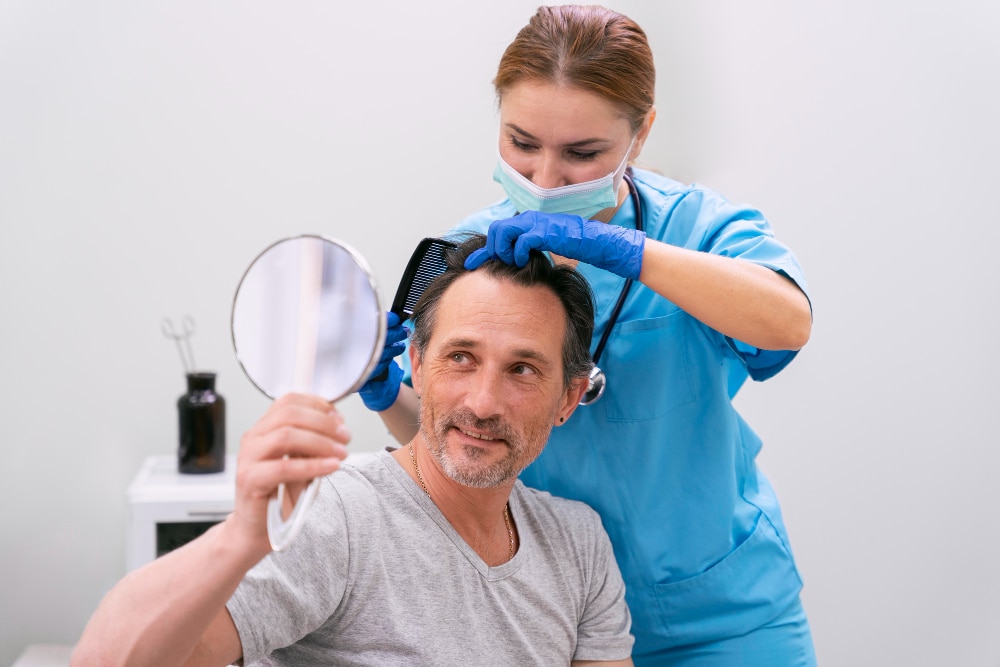
Hair restoration is a significant decision that can have a lasting impact on your appearance and confidence. Selecting the right surgeon is crucial to achieving the best possible outcome. Here are vital factors to consider when choosing a hair restoration surgeon to ensure you receive top-quality care and results. Qualifications and Experience When it comes to hair restoration, the surgeon’s qualifications and experience are paramount. Board Certification: Ensure the surgeon is board-certified in dermatology or plastic surgery. Certification from the American Board of Hair Restoration Surgery (ABHRS) is also a strong indicator of expertise. Years of Experience: A surgeon with several years of experience in hair restoration will have honed their skills and developed a keen eye for natural-looking results. Specialization: Look for a surgeon who specializes exclusively in hair restoration rather than one who practices it as part of a broader range of cosmetic procedures. Hair Restoration Techniques and Technology Hair restoration techniques have evolved significantly over the years. Understanding the surgeon’s methods and technology can help you make an informed choice. FUT vs. FUE: Familiarize yourself with the two primary hair transplant techniques: Follicular Unit Transplantation (FUT) and Follicular Unit Extraction (FUE). Each has pros and cons, and the proper technique for you will depend on your specific needs and goals. Advanced Technology: Surgeons who utilize the latest technology and equipment often achieve better results. Ask about the tools and methods they use for harvesting and implanting hair follicles. Customized Treatment Plans: A reputable surgeon will create a personalized treatment plan based on your hair type, extent of hair loss, and desired outcome. Before-and-After Photos Reviewing before-and-after photos of previous patients can give you a realistic idea of the surgeon’s capabilities and the results you can expect. Consistency: Look for consistent, natural-looking results across multiple patients. Diversity: Ensure the surgeon has experience with patients with hair types and hair loss patterns similar to yours. Quality: High-quality photos showing the transformation can help you assess the surgeon’s skill and attention to detail. Patient Reviews and Testimonials Patient reviews and testimonials provide valuable insights into the surgeon’s practice and patient satisfaction. Online Reviews: Check reviews on independent websites like RealSelf, Google, and Yelp. Pay attention to comments about the surgeon’s professionalism, the quality of care, and the results. Testimonials: Many surgeons feature patient testimonials on their websites. These can provide a more detailed account of the patient experience and outcome. Patient Referrals: Speak with former patients to get firsthand feedback about their experience with the surgeon. Consultation Process The consultation process allows you to evaluate the surgeon and their approach to hair restoration. Comprehensive Evaluation: A thorough consultation should include assessing your medical history, hair loss pattern, and scalp condition. The surgeon should also discuss your goals and expectations. Transparency: The surgeon should provide clear information about the procedure, including potential risks, benefits, and recovery time. Comfort Level: Your comfort and trust in the surgeon are crucial. Ensure you feel at ease discussing your concerns and that the surgeon listens attentively and addresses your questions. Cost and Financing Options Hair restoration can be a significant investment, so it’s essential to understand the costs involved and the available financing options. Detailed Estimate: The surgeon should provide a detailed estimate that includes all costs associated with the procedure, such as surgeon fees, anesthesia, and post-operative care. Financing Plans: Many practices offer financing plans to make the procedure more affordable. Inquire about available options and choose a plan that fits your budget. Value Over Price: While cost is an essential factor, prioritize the surgeon’s qualifications, experience, and quality of care over price. A successful procedure is worth the investment. Post-operative Care and Support Post-operative care is critical to the success of your hair restoration procedure. Ensure the surgeon provides comprehensive support throughout the recovery process. Follow-Up Appointments: Regular follow-up appointments allow the surgeon to monitor your progress and address concerns. Support Services: The practice should offer support services, such as access to a nurse or a helpline, for any questions or issues that arise after the procedure. Instructions and Guidelines: The surgeon should provide clear post-operative instructions and guidelines to promote healing and optimize results. Conclusion Choosing the right hair restoration surgeon is essential for achieving natural-looking, long-lasting results. By considering the surgeon’s qualifications, experience, techniques, and patient feedback, you can confidently make an informed decision and embark on your hair restoration journey. Frequently Asked Questions 1. Who is Azza Halim, MD and what is her expertise in hair restoration? Azza Halim, MD, is a renowned hair restoration specialist with extensive experience providing natural-looking hair transplants using the latest techniques and technology. She is known for her personalized approach and high patient satisfaction. 2. How do I know I’m a good candidate for hair restoration surgery? You might be a good candidate for hair restoration if you have significant hair loss, healthy donor hair, and realistic expectations about the outcomes. A consultation with a qualified surgeon will help determine your suitability. 3. What are the differences between FUT and FUE hair transplant techniques? FUT (Follicular Unit Transplantation) involves removing a strip of scalp to harvest hair follicles. At the same time, FUE (Follicular Unit Extraction) extracts individual follicles. FUE is less invasive and has a quicker recovery time, but both methods can provide excellent results. 4. What should I expect during my consultation with Azza Halim, MD? During your consultation with Azza Halim, MD, you can expect a comprehensive evaluation of your hair loss, a discussion of your goals, and a personalized treatment plan. Dr. Halim will explain the procedure, answer your questions, and provide guidance on the best approach for your needs. 5. How long is the recovery period after hair restoration surgery? The recovery period varies, but most patients can return to normal activities within a week. Full recovery and the appearance of new hair growth typically occur over several months. Your surgeon will provide specific post-operative care instructions to ensure optimal healing and results. Restore Your Confidence with Azza

Read More »

12 Derm-Approved Oil-Free Makeup Removers for Your Gentlest Cleanse Yet: Well+Good

By: Allison Taylor March 20, 2024 There’s something about an artful smoky eye, a bold lip, and a filter-finish foundation that makes us feel unstoppable! But when it comes to taking off high-impact glam, that’s another story. As someone who loves her long-wear matte lipstick and liquid eyeliner just as much as her (very thorough) skincare routine, I know the struggle well. Yes, it can be a hassle to sweep away every scrap of makeup before I can finally hit the hay, but the alternative—acne flare-ups, oily skin, and smudged sheets—is far less appealing. Enter one of my favorite skincare heroes: oil-free makeup remover. Oil-free makeup remover is a gentle yet effective solution that easily dissolves makeup, dirt, and impurities without disturbing the balance of your skin. As board-certified dermatologist Dr. Anetta Reszko explains, it’s the optimal choice for those with sensitive, mature, or combination skin types. “It’s better to choose an oil-free makeup remover as opposed to an oil-based one, as oil can clog pores if it’s not perfectly removed with an additional cleanser,” she advises. “This helps prevent the occurrence of acne and other unwanted irritation.” While some oil-free makeup removers are designed to be rinse-free, she recommends following up with a mild cleanser to ensure that every last bit of makeup and grime is gone. Oil-free makeup remover comes in many forms, from micellar waters and gels to foams and wipes, which means there’s a wealth of options for every type of routine. In addition to testing several formulas myself, I turned to two board-certified dermatologists to help me round up the very best options for clean, refreshed skin. Read on to see which oil-free makeup removers made the cut. The best oil-free makeup removers, at a glance: Best overall: Bioderma, Sensibio H2O Micellar Water Makeup Remover, $16 Runner-up: IS Clinical, Cleansing Complex, $48 Best splurge: Perricone MD, No Rinse Micellar Cleansing Treatment, $49 Best drugstore option: Garnier, SkinActive Micellar Cleansing Water, $12 Best for acne-prone skin: Avene, Cleanance Cleansing Gel, $23 Best for sensitive skin: SkinBetter Science, Cleansing Gel, $48 Best for oily skin: La Roche-Posay, Effaclar Micellar Cleansing Water for Oily Skin, $18 Best for mature skin: Paula’s Choice, Gentle Touch Makeup Remover, $19 Best for eyelash extensions: Velour Lashes, Lash Clean Oil-Free Makeup Remover, $23 Best wipes: Aveeno, Positively Radiant Oil-Free Makeup Removal Facial Wipes (2-Pack), $14 Best foam: ILIA, The Cleanse Soft Foaming Cleanser + Make Up Remover, $32 Best clean formula: Milk Makeup, Hydro Ungrip Makeup Remover + Cleansing Water, $32   Dermatologists agree that it’s important to look for oil-free makeup removers that are water-based and contain humectants, aka ingredients that attract moisture and pull it into the skin. You’ll find humectants like glycerin, hyaluronic acid, urea, and propylene glycol featured throughout our selections. If you have dry, sensitive, or acne-prone skin, be cautious about products with active ingredients like AHAs (think glycolic and lactic acids), which exfoliate the surface of the skin. While these can be beneficial in small doses, it’s easy to overdo it—especially if you have several products with AHAs in your lineup.   View Original Article on Well+Good

Read More »
Skip to content